The ArtSleuth Chronicle
“Curated insights from the world of art.”
Edition of November 4, 2026
On This Day
-
1575
Born
Italian painter Guido Reni was born; blending Baroque themes with a classical manner, he became the dominant figure of the Bolognese School.
Wikipedia → -
1592
Born
Dutch Golden Age painter Gerard van Honthorst was born; famed for his artificially lit nocturnal scenes, he found great success painting in Rome.
Wikipedia → -
1856
Died
French painter Paul Delaroche died; known for pragmatic realism in French and English history scenes, he mentored artists like Couture, Gérôme, and Millet.
Wikipedia → -
1946
Born
American photographer Robert Mapplethorpe was born; celebrated for black-and-white portraits and still lifes, his work sparked pivotal debates on art.
Wikipedia →
Artwork of the Day
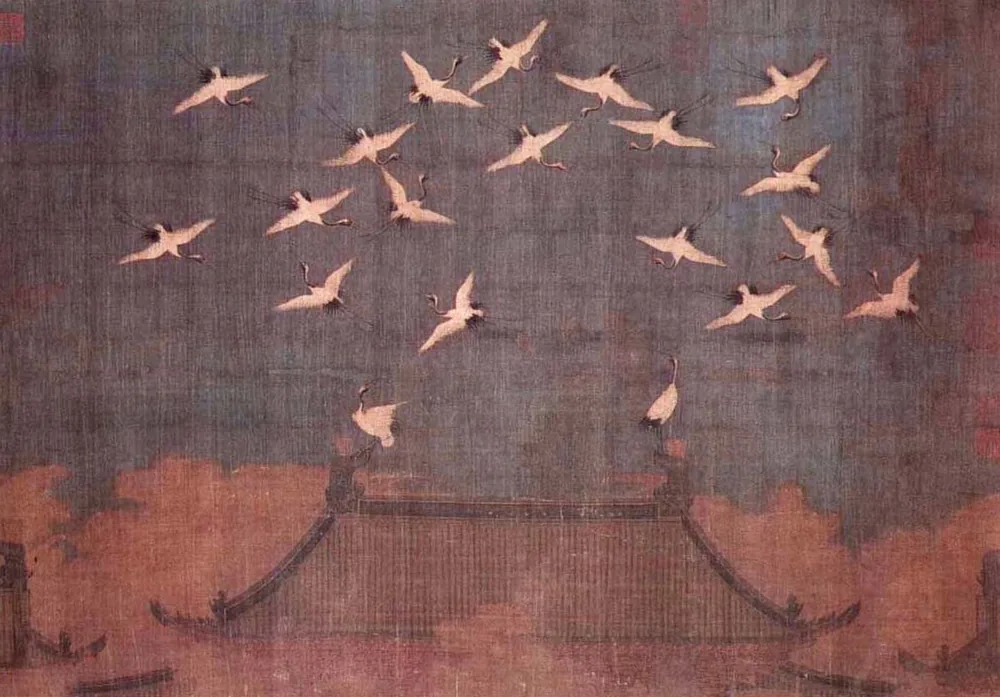
Auspicious Cranes
Emperor Huizong of Song, whose personal name was Zhao Ji, created the Chinese painting Auspicious Cranes in 1112. Huizong was the eighth emperor of the Song dynasty, having ascended the imperial throne in 1100 after the death of his elder brother, Emperor Zhezong. Governing from the capital of Bianjing, Huizong was an imperial ruler who strongly promoted Taoism throughout his realm while maintaining a lavish lifestyle centered around rarities and the visual arts. His imperial reign became renowned for exquisite cultural pursuits alongside political challenges involving court officials and regional uprisings. Auspicious Cranes reflects the cultural and spiritual environment of Huizong's court, presenting auspicious cranes connected to imperial omens and Taoist patronage during his rule. Created directly under the brush of a reigning Chinese sovereign, this work remains an essential milestone of Song court painting, exemplifying the artistic dedication and sovereign identity of Emperor Huizong before outside invasions transformed his realm.
Look for
- Depiction of auspicious cranes gathered in flight
- Atmospheric sky set above Bianjing's imperial rooftops
- Delicate brushwork reflecting the sovereign's Taoist interests
The Daily Quiz
5 questions from today's reading. Pick an answer to see if you're right.
-
Which material did Hieronymus Bosch generally use as a support for his oil paintings?
Answer
Oak wood. Bosch's paintings were generally executed in oil on oak wood.
-
Why did the Catholic Church encourage the Baroque style across Europe?
Answer
To counter the simplicity and austerity of Protestant art. The Catholic Church encouraged the style to counter the simplicity and austerity of Protestant architecture, art, and music.
-
Alongside which body of water was the Frank Gehry-designed Guggenheim Museum Bilbao built?
Answer
Nervion River. The museum building was constructed alongside the Nervion River in Bilbao.
-
Where did the history of mosaics originate during the 3rd millennium BC?
Answer
Mesopotamia. Mosaics trace a long history that began in Mesopotamia in the 3rd millennium BC.
-
In which country did Paul Gauguin experience a privileged childhood until the age of six?
Answer
Peru. Gauguin's family settled in Peru in 1850, where he lived until he returned to France at age six.
Puzzle Corner
Who am I?
- Critics described my depiction of feminine beauty as the final chapter in a tradition running directly from Rubens to Watteau.
- My artistic legacy continued through my sons, one of whom became an internationally celebrated filmmaker and another a prominent actor.
- A third son worked as a ceramic artist, and my grandson later directed films as well.
- I was one of the core French Impressionist painters, celebrated for my portrayals of radiant Parisian life.
Reveal the answer
Pierre-Auguste Renoir. Pierre-Auguste Renoir was a leading French Impressionist artist renowned for his portrayals of feminine beauty. Wikipedia →
Scrambled masters
GESGORE ASTURE
French Neo-Impressionist who devised pointillism and chromoluminarism, painting La Grande Jatte.
Show answer
Georges Seurat Wikipedia →
HESRGHIIO
Japanese ukiyo-e master famous for landscape series like The Fifty-three Stations of the Tōkaidō.
Show answer
Hiroshige Wikipedia →
RCMA LHALGCA
Modernist artist of Jewish folklore, known for paintings, stained glass, and École de Paris works.
Show answer
Marc Chagall Wikipedia →
Word of the Day
Contrapposto
kohn-truh-POH-stoh
A stance in visual art where a human figure shifts most weight onto one foot, causing the shoulders and arms to turn off-axis from the hips and legs. Originating in Ancient Greece, it marked the first time Western art used the body to reflect a psychological disposition.
Example: Michelangelo's statue of David
Wikipedia →Daily features are written by ArtSleuth's AI (Google Gemini) from the linked Wikipedia articles. Paintings: public domain, via Wikimedia Commons.