The ArtSleuth Chronicle
“Curated insights from the world of art.”
Edition of November 3, 2026
On This Day
-
1500
Born
Benvenuto Cellini was an Italian goldsmith, sculptor, and author celebrated for his Salt Cellar and his bronze statue of Perseus with the Head of Medusa.
Wikipedia → -
1560
Born
Annibale Carracci, an Italian painter whose work at the Palazzo Farnese influenced Roman painting for decades, helped pioneer the dynamic Baroque style.
Wikipedia → -
1949
Died
Solomon R. Guggenheim was an American art collector and philanthropist who established the foundation and museum bearing his name in New York City.
Wikipedia → -
1954
Died
Henri Matisse, a leader of the Fauves and one of modern art's key innovators alongside Picasso, was renowned for his fluid draughtsmanship and intense colour.
Wikipedia →
Artwork of the Day
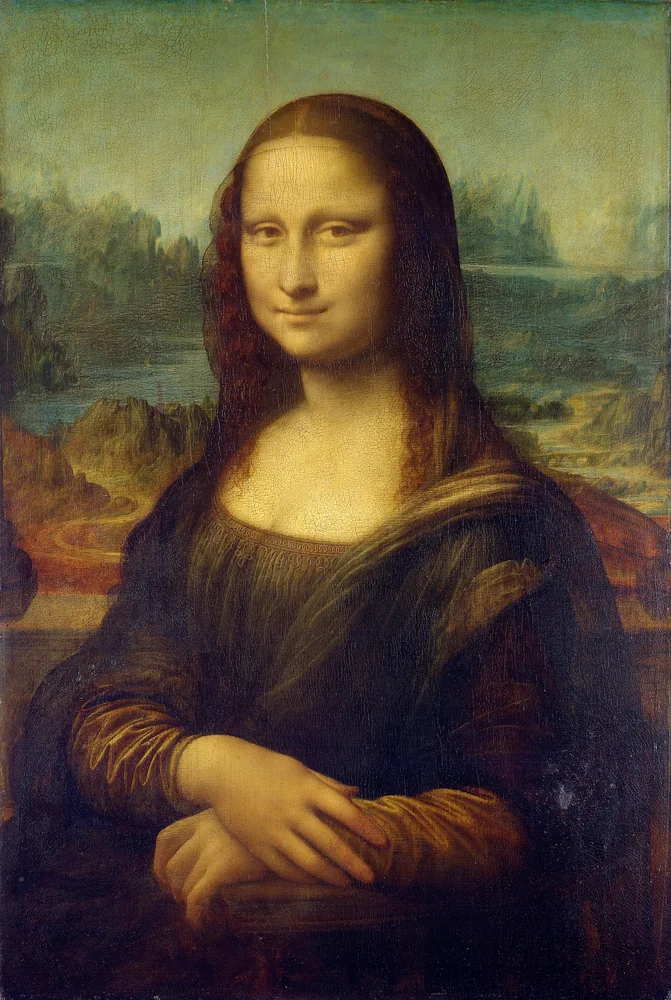
Mona Lisa
Painted in oil on a white poplar panel, Leonardo da Vinci's Mona Lisa is an archetypal masterpiece of the Italian Renaissance. The half-length portrait has traditionally been considered to depict the Italian noblewoman Lisa del Giocondo, though Leonardo famously never gave the painting to the Giocondo family. Renowned as the most visited, most written about, and most parodied artwork in the world, the painting captivates viewers through several revolutionary qualities. Among these distinctive traits are the sitter's enigmatic expression, the subtle modelling of forms, the monumental presence of the composition, and Leonardo's pioneering use of atmospheric illusionism. Through these innovations, Leonardo created an enduring image that redefined portraiture and secured its place as Western art's most celebrated achievement.
Look for
- The sitter's enigmatic expression
- Subtle modelling of forms and contours
- Atmospheric illusionism in the background
The Daily Quiz
5 questions from today's reading. Pick an answer to see if you're right.
-
Which writer influenced Edvard Munch to paint his own emotional and psychological state in a style known as soul painting?
Answer
Hans Jæger. Hans Jæger, a bohemian nihilist, urged Munch to paint his inner psychological and emotional experiences.
-
In which former industrial building is London's Tate Modern located?
Answer
Bankside Power Station. Tate Modern is housed within the former Bankside Power Station in London.
-
What spurred Katsushika Hokusai to create his famous series Thirty-Six Views of Mount Fuji?
Answer
A domestic travel boom and personal interest. Hokusai produced the series in response to a domestic travel boom in Japan and his own personal interest in Mount Fuji.
-
What does the Greek root morphe mean in the term anamorphosis?
Answer
Shape or form. The word anamorphosis derives in part from the Greek word morphe, meaning shape or form.
-
Which artistic movement influenced the aesthetic vision of the Hudson River School landscape painters?
Answer
Romanticism. The Hudson River School landscape painters based their aesthetic vision on Romanticism.
Puzzle Corner
Who am I?
- In 1931, the Museum of Modern Art in Manhattan held a major retrospective exhibition dedicated to my artwork.
- The following year, I commenced a celebrated twenty-seven-work series titled Detroit Industry Murals in the United States.
- Between 1922 and 1953, I created monumental frescoes across cities such as Chapingo, Cuernavaca, and San Francisco.
- My large-scale fresco projects helped establish the famous mural movement in my native Mexico and throughout international art.
Reveal the answer
Diego Rivera. Diego Rivera was a renowned Mexican painter whose monumental frescoes helped define modern public art and the mural movement. Wikipedia →
Scrambled masters
IPTE INOMRAND
Dutch pioneer of 20th-century abstract art who reduced his vocabulary to simple geometric elements.
Show answer
Piet Mondrian Wikipedia →
OREGEGS TARUSE
French post-Impressionist who devised pointillism and painted A Sunday Afternoon on the Island of La Grande Jatte.
Show answer
Georges Seurat Wikipedia →
NHOUEIRYMS HBSCO
Early Netherlandish painter from Brabant known for fantastic religious works and macabre depictions of hell.
Show answer
Hieronymus Bosch Wikipedia →
Word of the Day
Mosaic
moh-ZAY-ik
An image or decorative pattern composed of small pieces of colored stone, glass, or ceramic set into plaster or mortar. The medium has been widely utilized since antiquity for decorating walls, ceilings, and floors.
Example: The pebble mosaics of Tiryns in Mycenaean Greece
Wikipedia →Daily features are written by ArtSleuth's AI (Google Gemini) from the linked Wikipedia articles. Paintings: public domain, via Wikimedia Commons.