The ArtSleuth Chronicle
“Curated insights from the world of art.”
Edition of October 23, 2026
On This Day
-
1698
Born
Ange-Jacques Gabriel was born; the premier architect to King Louis XV designed the Place de la Concorde, the École Militaire, and the Petit Trianon.
Wikipedia → -
1885
Born
Lawren Harris was born; as a founding member of the Group of Seven, he became a visionary force in Canadian landscape and modern painting.
Wikipedia → -
1935
Died
Charles Demuth died; the American painter developed Precisionism and was acclaimed for watercolors uniting precise observation with Cubist abstraction.
Wikipedia → -
2013
Died
Anthony Caro died; the influential English abstract sculptor was celebrated for assembling metal sculptures out of found and industrial elements.
Wikipedia →
Artwork of the Day
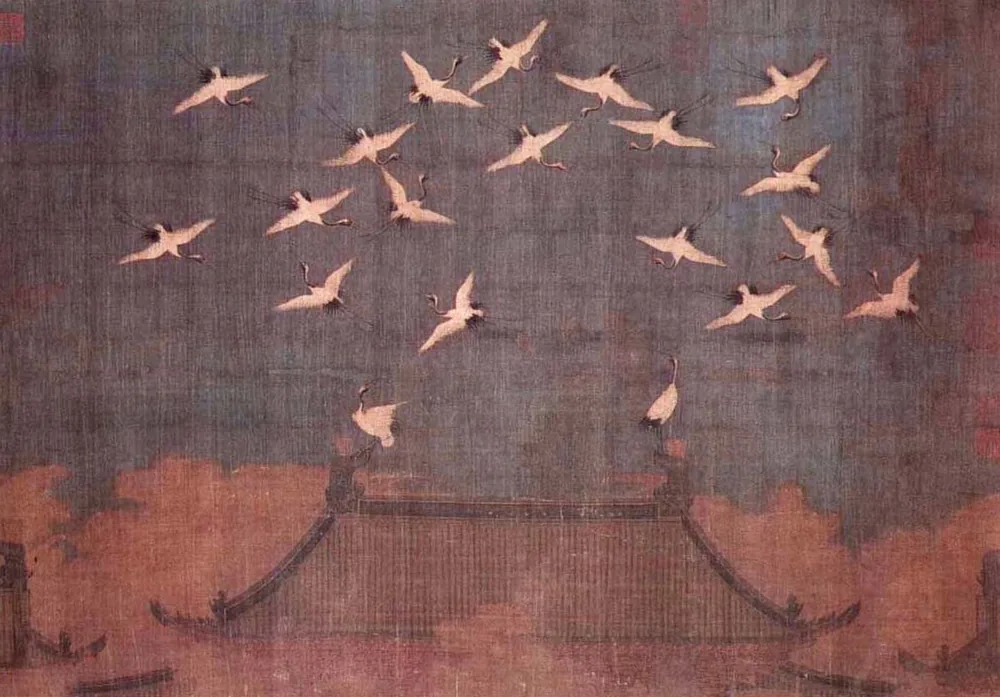
Auspicious Cranes
Emperor Huizong of Song, the eighth monarch of China's Song dynasty, was renowned as a passionate aesthetician and promoter of Taoism alongside his reign in Bianjing. Produced in 1112, "Auspicious Cranes" commemorates an imperial event when white cranes suddenly gathered over the palace roof, interpreted as divine confirmation of his celestial authority and good fortune. Rather than leaving such vital state wonders to court artisans alone, the emperor himself executed works to capture these cosmic blessings. In Huizong's hands, painting served simultaneously as elite fine art and sacred court documentation. His delicate composition presents cranes wheeling gracefully across an ethereal expanse above decorated roof tiles, celebrating spiritual harmony and dynastic prestige. Despite later political catastrophe and abdication under northern invasion, Huizong's refined brushwork remains a celebrated landmark of imperial Chinese painting.
Look for
- White cranes soaring across the sky above the imperial buildings
- Two cranes perched directly atop the palace roof ridges
- Imperial calligraphy documenting the auspicious sighting
The Daily Quiz
5 questions from today's reading. Pick an answer to see if you're right.
-
Where is the National Gallery located in London?
Answer
Trafalgar Square. The National Gallery is situated in Trafalgar Square in the City of Westminster.
-
What dramatic lighting technique became a dominant element of Caravaggio's style?
Answer
Tenebrism. Caravaggio employed intense chiaroscuro known as tenebrism, using bright shafts of light against darkening shadows.
-
Which Russian artist founded the Suprematist movement in 1913?
Answer
Kazimir Malevich. Suprematism was founded in 1913 by Russian artist Kazimir Malevich.
-
Which major American museum hosted a retrospective exhibition of Diego Rivera's work in 1931?
Answer
Museum of Modern Art. A retrospective of Diego Rivera's paintings was held at the Museum of Modern Art in Manhattan in 1931.
-
How is a traditional grisaille painting executed?
Answer
Entirely in shades of grey or neutral monochrome tones. A grisaille is executed completely in shades of grey, black, or another neutral greyish colour.
Puzzle Corner
Who am I?
- I rejected the famous label applied to my group, preferring to consider myself a realist who worked inside the studio.
- My masterly draftsmanship captured racehorses and their jockeys in motion at the track.
- Beyond paintings and prints, I modeled wax sculptures, notably of bathing female figures.
- More than half of my total artworks depict ballet dancers in rehearsal and on stage.
Reveal the answer
Edgar Degas. Edgar Degas was a French master renowned for his exceptional studies of dancers, bathers, and movement. Wikipedia →
Scrambled masters
IAITTN
Master of the Venetian Renaissance famous for revolutionary application and use of colour.
Show answer
Titian Wikipedia →
IQ IBSAIH
Self-taught Chinese painter noted for a whimsical style portraying vegetables, toys, and animals.
Show answer
Qi Baishi Wikipedia →
REHSOGIIH
Last great ukiyo-e master who created the Fifty-three Stations of the Tōkaidō print series.
Show answer
Hiroshige Wikipedia →
Word of the Day
Sgraffito
zgrah-FEE-toh
A decorative technique in which an artist scratches through a surface layer of plaster, slip, or glaze to uncover an underlying layer of a contrasting colour. It is widely used in wall decor and ceramics.
Example: Contrasting tinted plaster scratchwork decorating the exterior façade of Renaissance palaces.
Wikipedia →Daily features are written by ArtSleuth's AI (Google Gemini) from the linked Wikipedia articles. Paintings: public domain, via Wikimedia Commons.