The ArtSleuth Chronicle
“Curated insights from the world of art.”
Edition of October 20, 2026
On This Day
-
1438
Died
Italian Early Renaissance sculptor Jacopo della Quercia, an important contemporary of Donatello and Ghiberti, died in Siena.
Wikipedia → -
1620
Born
Dutch Golden Age painter Aelbert Cuyp, renowned for his large riverside landscapes glowing in warm morning or afternoon light, was born in Dordrecht.
Wikipedia → -
1847
Born
Norwegian Impressionist painter Frits Thaulow, celebrated for his naturalistic landscape compositions, was born in Christiania.
Wikipedia → -
1940
Died
Swedish architect Gunnar Asplund, a major figure of Nordic Classicism and modernism who co-designed Skogskyrkogården, passed away.
Wikipedia →
Artwork of the Day
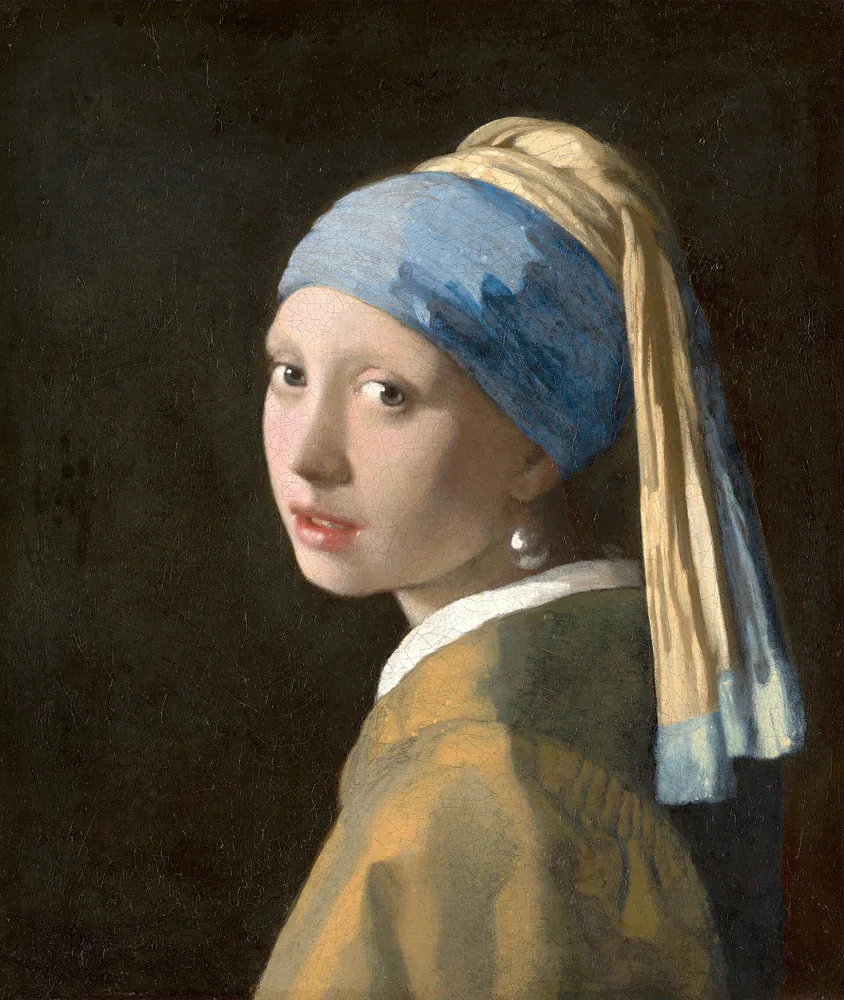
Girl with a Pearl Earring
Completed around 1665 by Johannes Vermeer during the Dutch Golden Age, Girl with a Pearl Earring is an iconic oil painting celebrated for its striking intimacy and luminosity. Rather than a standard formal portrait, the work depicts an idealized young woman dressed in an exotic turban, captured in a fleeting moment as she turns her gaze toward the viewer over a dark background. Vermeer masterfully rendered the play of soft light across her gentle features, damp lips, and the large pendant gleaming beside her neck. Over centuries, the canvas was known under various titles before receiving its present name near the close of the twentieth century. Conserved at the Mauritshuis in The Hague since 1902, the painting has captivated generations of art enthusiasts and inspired numerous literary and cinematic adaptations worldwide.
Look for
- The large, lustrous drop pearl catching a gentle highlight
- The vivid blue and yellow fabric wrapped into an exotic turban
- The soft reflection of light lingering on her parted lips
The Daily Quiz
5 questions from today's reading. Pick an answer to see if you're right.
-
Which trio of patrons conceived the Museum of Modern Art in 1929?
Answer
Abby Aldrich Rockefeller, Lillie P. Bliss, and Mary Quinn Sullivan. The Museum of Modern Art was conceived in 1929 by Abby Aldrich Rockefeller, Lillie P. Bliss, and Mary Quinn Sullivan.
-
Which foreign artistic tradition exerted the strongest influence on Gustav Klimt among Vienna Secession members?
Answer
Japanese art. Among the artists of the Vienna Secession, Gustav Klimt was the most influenced by Japanese art and its methods.
-
From which painting's title did the term 'Impressionism' originate?
Answer
Impression, Sunrise. The movement took its name from Claude Monet's painting Impression, Sunrise, shown at the First Impressionist Exhibition in 1874.
-
Where did the Pop art movement initially emerge during the mid-to-late 1950s?
Answer
The United Kingdom and the United States. Pop art emerged in the United Kingdom and the United States during the mid-to-late 1950s.
-
What common binding agent is typically found in gouache paint?
Answer
Gum arabic or dextrin. Gouache consists of natural pigment, water, and a binding agent usually made of gum arabic or dextrin.
Puzzle Corner
Who am I?
- I recorded anatomical dissections, botanical studies, and mechanical inventions in mirror script across thousands of notebook pages.
- Trained in Florence in the bustling bottega of Andrea del Verrocchio, I grew into one of the quintessential polymaths of the High Renaissance.
- My younger Florentine rival and I came to define European art at its absolute peak.
- I painted the portrait of a Florentine merchant's wife renowned for her enigmatic, subtle smile.
Reveal the answer
Leonardo da Vinci. This is Leonardo da Vinci, the Italian High Renaissance polymath celebrated for his notebooks and transcendent paintings. Wikipedia →
Scrambled masters
EPTI IDMNAONR
Dutch abstraction pioneer who reduced his artistic vocabulary to primary colors, right angles, and geometric grids.
Show answer
Piet Mondrian Wikipedia →
AIAGKTAW TAAORUM
Master Japanese printmaker famed for his dramatic ukiyo-e portraits of beautiful women with elongated features.
Show answer
Kitagawa Utamaro Wikipedia →
GOHLEAELIMNC
Florentine High Renaissance sculptor and painter who carved David and frescoed the ceiling of the Sistine Chapel.
Show answer
Michelangelo Wikipedia →
Word of the Day
Triptych
TRIP-tik
A work of art, typically a panel painting, divided into three hinged sections that can be folded shut or displayed open.
Example: Hieronymus Bosch's The Garden of Earthly Delights
Wikipedia →Daily features are written by ArtSleuth's AI (Google Gemini) from the linked Wikipedia articles. Paintings: public domain, via Wikimedia Commons.