The ArtSleuth Chronicle
“Curated insights from the world of art.”
Edition of October 19, 2026
On This Day
-
1723
Died
British court painter Sir Godfrey Kneller passed away, the leading portraitist who depicted monarchs and painted the Hampton Court Beauties.
Wikipedia → -
1882
Born
Italian painter and sculptor Umberto Boccioni was born, who helped shape the revolutionary aesthetic of Futurism through his dynamic approach to form.
Wikipedia → -
1943
Died
French sculptor Camille Claudel passed away, celebrated for her figurative works in bronze and marble, including The Waltz and The Mature Age.
Wikipedia → -
1945
Died
American painter and illustrator N. C. Wyeth died, remembered for his prolific work including Scribner Classics illustrations for Treasure Island.
Wikipedia →
Artwork of the Day
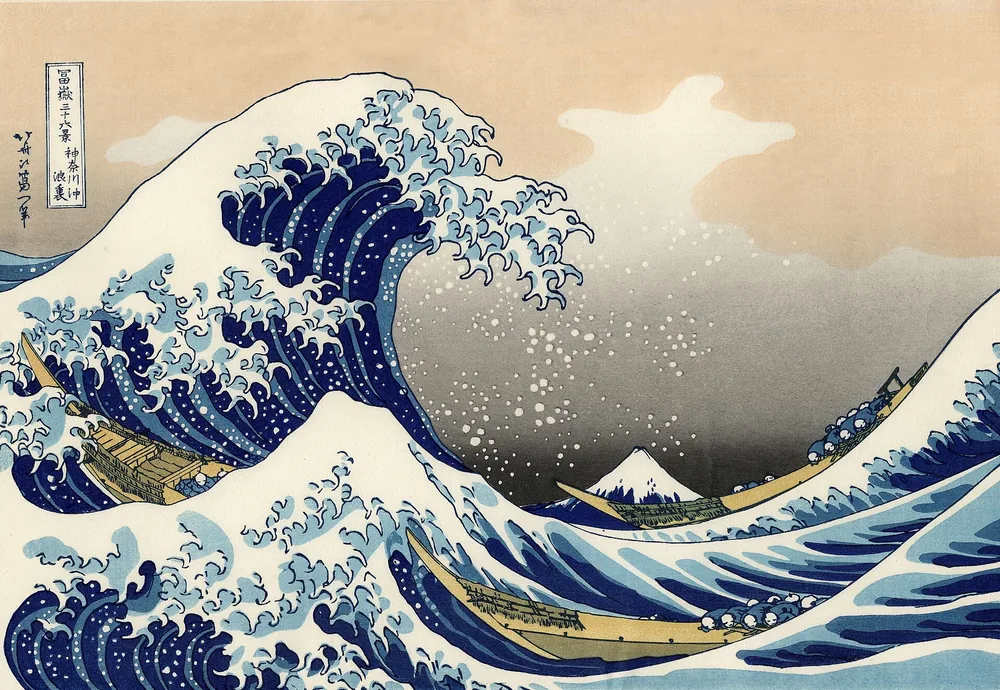
The Great Wave off Kanagawa
Created in late 1831 during Japan's Edo period, The Great Wave off Kanagawa is the celebrated woodblock print by ukiyo-e master Katsushika Hokusai. The artwork captures three slender boats navigating a tumultuous, storm-tossed sea beneath an immense cresting wave that spirals across the center, framing a distant Mount Fuji. As the opening print in Hokusai's famous series Thirty-six Views of Mount Fuji, it demonstrated groundbreaking technique through its vibrant use of Prussian blue, which revolutionized Japanese printmaking. Hokusai masterfully synthesized traditional Japanese woodblock aesthetics with European graphical perspective, creating dynamic tension between the churning ocean foreground and the serene mountain beyond. The print met with immediate acclaim in Japan and later captivated European audiences, exerting a profound influence on the Impressionist movement. Today, preserved in major museums across the globe, it stands as an enduring emblem of Japanese artistic innovation.
Look for
- Three boats navigating the storm-tossed sea
- The cresting wave forming a central spiral
- Mount Fuji visible in the background
The Daily Quiz
5 questions from today's reading. Pick an answer to see if you're right.
-
What term describes an object that has gold applied only to parts of its surface?
Answer
Parcel-gilt. Parcel-gilt objects are only gilded over part of their surfaces, leaving other areas ungilded.
-
Cézanne's work is famously recognized as forming an artistic bridge between which two movements?
Answer
Impressionism and Cubism. Cézanne formed the bridge between late 19th-century Impressionism and early 20th-century Cubism.
-
Before becoming an art museum, what was the building housing the Musée d'Orsay originally constructed as?
Answer
A railway station. The Musée d'Orsay is housed in the former Gare d'Orsay, a Beaux-Arts railway station built between 1898 and 1900.
-
Which era corresponds to the period when Art Nouveau was popular between 1890 and 1910?
Answer
The Belle Époque. Art Nouveau was popular between 1890 and 1910 during the Belle Époque period.
-
Marc Chagall's unique modernist style drew significant inspiration from which cultural source?
Answer
Eastern European and Jewish folklore. Chagall developed his distinct modern style using ideas drawn from Eastern European and Jewish folklore.
Puzzle Corner
Who am I?
- An astronomical impact crater on the planet Mercury is named in my honour.
- Beginning in 1950, international media celebrated me with the title of Africa's Greatest Artist.
- My international renown and exhibitions across Europe and the United States were enlisted to support the Black Nationalists movement worldwide.
- I was a 20th-century Nigerian painter and sculptor whose pioneering modern work opened the way for postcolonial African art.
Reveal the answer
Ben Enwonwu. You are Ben Enwonwu, the celebrated Nigerian painter and sculptor who was hailed as Africa's Greatest Artist. Wikipedia →
Scrambled masters
ENRHI ASSTEMI
French master celebrated for bold colour, fluid draughtsmanship, and leadership among the Fauves.
Show answer
Henri Matisse Wikipedia →
AIKATGWA ROAMATU
Japanese ukiyo-e printmaker famous for his 1790s portraits of beautiful women with elongated features.
Show answer
Kitagawa Utamaro Wikipedia →
RDIAF AOLKH
Mexican painter known for autobiographical self-portraits blending folk art, realism, and personal pain.
Show answer
Frida Kahlo Wikipedia →
Word of the Day
Perspective
per-SPEK-tiv
The technique of representing three-dimensional objects on a flat, two-dimensional surface as they appear to the human eye. In this method, objects appear smaller as their distance from the observer increases and undergo foreshortening.
Example: The Great Wave off Kanagawa by Katsushika Hokusai
Wikipedia →Daily features are written by ArtSleuth's AI (Google Gemini) from the linked Wikipedia articles. Paintings: public domain, via Wikimedia Commons.