The ArtSleuth Chronicle
“Curated insights from the world of art.”
Edition of October 16, 2026
On This Day
-
1523
Died
Italian Renaissance painter Luca Signorelli died, celebrated for his foreshortening and dramatic frescoes in Orvieto Cathedral.
Wikipedia → -
1553
Died
German Renaissance master Lucas Cranach the Elder died, remembered for portraits of Protestant Reformation figures like Martin Luther.
Wikipedia → -
1827
Born
Swiss Symbolist painter Arnold Böcklin was born; his atmospheric Isle of the Dead cycles inspired late Romantic composers.
Wikipedia → -
1890
Born
American modernist photographer Paul Strand was born; he co-founded the Photo League and helped establish photography as an art form.
Wikipedia →
Artwork of the Day
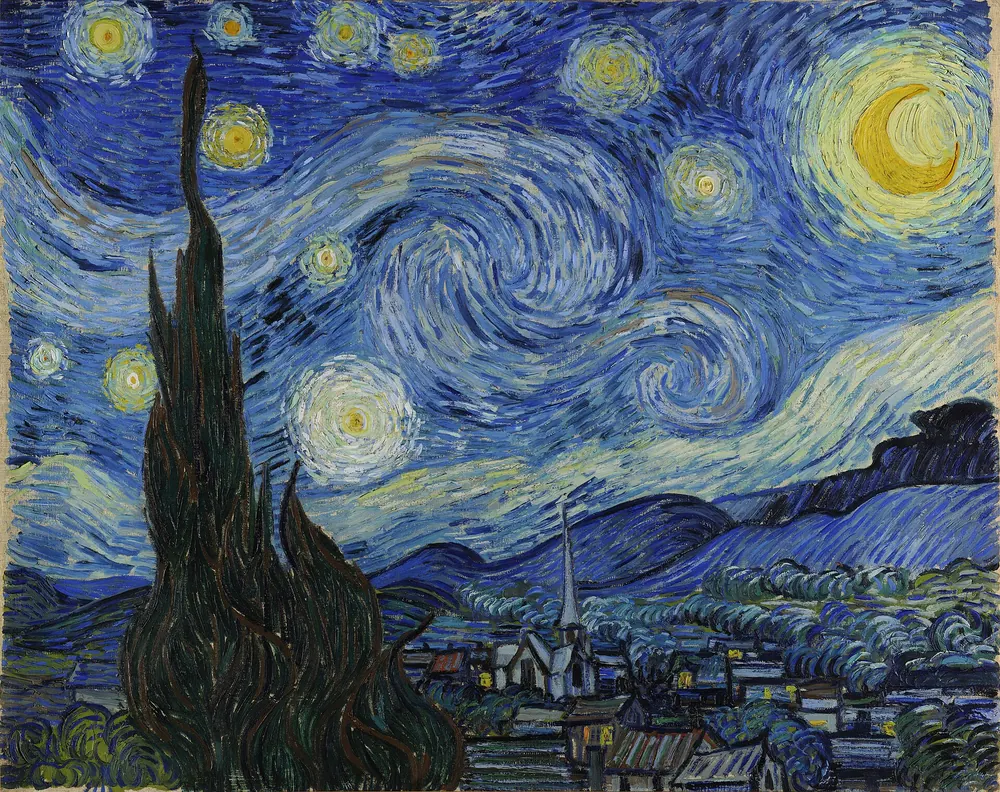
The Starry Night
Painted in June 1889 by Vincent van Gogh, The Starry Night captures the view just before sunrise from the east-facing window of his room at the Saint-Paul-de-Mausole mental asylum in Saint-Rémy-de-Provence. Following a breakdown, the Dutch Post-Impressionist painter had voluntarily entered the former monastery that May. Blending direct observation with creative imagination, Van Gogh added an invented village beneath the swirling, expressive night sky. Regarded as a touchstone of modern art and one of the most recognizable works in the Western canon, this vibrant oil-on-canvas painting has been housed in the permanent collection of New York's Museum of Modern Art since 1941, following its acquisition through the Lillie P. Bliss Bequest.
Look for
- The view facing east just before sunrise
- An imaginary village nestled beneath the hills
- Vibrant oil paint applied on canvas
The Daily Quiz
5 questions from today's reading. Pick an answer to see if you're right.
-
Which material did Hieronymus Bosch typically use as the support for his paintings?
Answer
Oak wood. Bosch's surviving works were generally executed in oil on oak wood.
-
Which ruler employed Jan van Eyck as court painter and valet de chambre around 1422?
Answer
John III the Pitiless. Van Eyck worked in The Hague for John III the Pitiless, ruler of Holland and Hainaut.
-
Before housing the Musée d'Orsay, what was the Beaux-Arts building on the Left Bank originally used for?
Answer
A railway station. The museum is housed in the former Gare d'Orsay, a railway station constructed between 1898 and 1900.
-
Romanticism emerged in late 18th-century Europe primarily in response to which two historical developments?
Answer
The Age of Enlightenment and the Industrial Revolution. Romanticism advocated subjectivity, imagination, and nature in reaction against the Enlightenment and Industrial Revolution.
-
From which French verb does the art-historical term 'provenance' originate?
Answer
Provenir. The term derives from the French verb provenir, meaning 'to come from or forth'.
Puzzle Corner
Who am I?
- I laid unprimed canvases horizontally across the floor so I could circle and confront them from all four sides.
- Critics were fiercely divided over my dynamic action painting, debating whether my bodily pours were genius or mere accident.
- My breakthrough drip technique relied on pouring fluid household paints across vast surfaces in rhythmic movements.
- I was an American Abstract Expressionist whose life and career were deeply guided by fellow artist and wife Lee Krasner.
Reveal the answer
Jackson Pollock. You are reading about American Abstract Expressionist Jackson Pollock. Wikipedia →
Scrambled masters
PBLOA SSPIAOC
Spanish master who co-founded Cubism and painted the dramatic anti-war canvas Guernica.
Show answer
Pablo Picasso Wikipedia →
IEOHRIGHS
Japanese ukiyo-e master renowned for his series The Fifty-three Stations of the Tōkaidō.
Show answer
Hiroshige Wikipedia →
ALRPHEA
High Renaissance master who formed a famed artistic trinity with Leonardo and Michelangelo.
Show answer
Raphael Wikipedia →
Word of the Day
En plein air
ahn-plehn-AIR
The practice of painting outdoors directly in nature rather than inside a studio. It allows artists to observe and capture immediate natural light and shifting weather conditions.
Example: Works by artists of the Barbizon School painted outdoors in natural light during the 1830s.
Wikipedia →Daily features are written by ArtSleuth's AI (Google Gemini) from the linked Wikipedia articles. Paintings: public domain, via Wikimedia Commons.