The ArtSleuth Chronicle
“Curated insights from the world of art.”
Edition of October 11, 2026
On This Day
-
1913
Born
Comic book artist and writer Joe Simon is born; he helped shape the Golden Age of Comic Books as the co-creator of Captain America.
Wikipedia → -
1924
Born
Art dealer André Emmerich is born; he became a major American gallerist specialising in the color field school and pre-Columbian art.
Wikipedia → -
1958
Died
Maurice de Vlaminck dies; the French painter was a principal figure in the Fauve movement, celebrated for using intense colour at the 1905 Salon d'Automne.
Wikipedia → -
1965
Died
Dorothea Lange passes away; the American documentary photographer humanised the Great Depression through iconic FSA works such as Migrant Mother.
Wikipedia →
Artwork of the Day
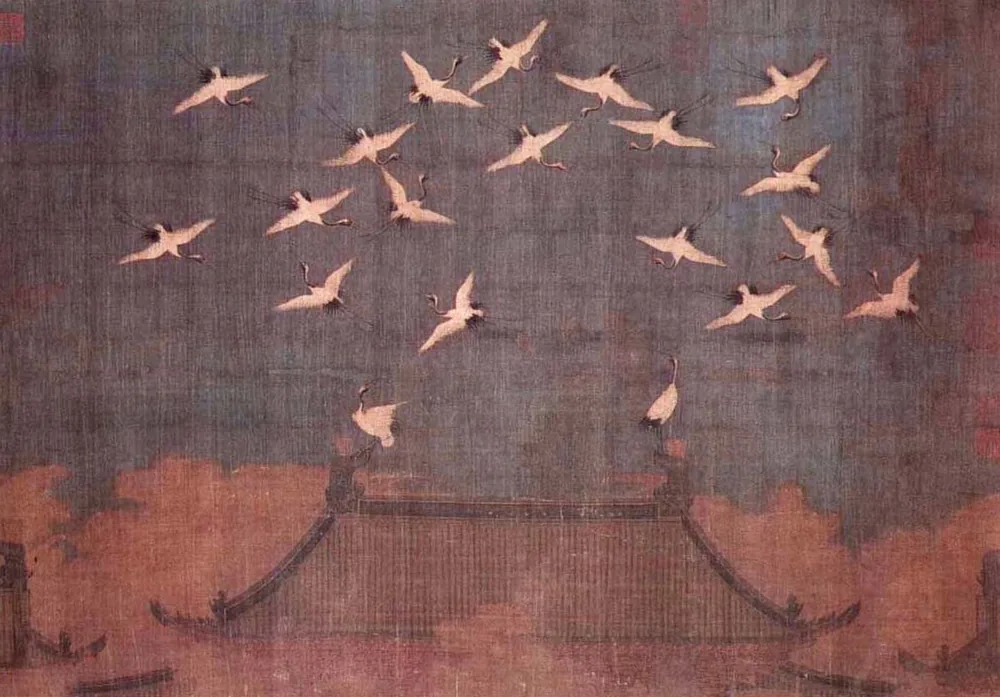
Auspicious Cranes
Created in 1112 in China, Auspicious Cranes is tied to Emperor Huizong of Song, personal name Zhao Ji, the eighth ruler of the Song dynasty. Ascending the throne in 1100, Huizong became known for his imperial court and refined cultural pursuits alongside a lavish lifestyle. During his reign centered at the capital of Bianjing, Huizong actively promoted Taoism, a tradition rich in sacred omens, while suppressing Buddhism. Auspicious Cranes stands as an imperial artistic creation produced during this height of Song culture. The work reflects Huizong's personal patronage, courtly tastes, and ideological atmosphere prior to the invasion by the Jin dynasty that later disrupted his rule. The piece endures as a vital relic of royal artistry from an emperor remembered for transforming imperial patronage and elevating fine arts during China's Song era.
Look for
- Auspicious cranes reflecting imperial Taoist symbolism
- Signs of courtly aesthetics from the Song dynasty capital Bianjing
- The distinct imperial artistic presence of Emperor Huizong
The Daily Quiz
5 questions from today's reading. Pick an answer to see if you're right.
-
Before gaining acclaim for modern impressionist and expressionist works in the 1960s, what style of painting was Zhang Daqian originally known for?
Answer
Guohua (traditionalist). Zhang Daqian was originally known as a guohua (traditionalist) painter before gaining renown for impressionist and expressionist works.
-
Which trio of artists headed the Mexican muralist project beginning in the 1920s as 'The Big Three'?
Answer
Diego Rivera, José Clemente Orozco, and David Alfaro Siqueiros. Diego Rivera, José Clemente Orozco, and David Alfaro Siqueiros formed 'The Big Three' leading the Mexican muralist movement.
-
How is the wooden block prepared in traditional woodcut relief printing?
Answer
Cut along the wood grain. In woodcut printmaking, the block is cut along the wood grain, unlike wood engraving which is cut in the end-grain.
-
From whom did Empress Catherine the Great acquire the painting collection that founded the State Hermitage Museum in 1764?
Answer
Johann Ernst Gotzkowsky. Catherine the Great founded the Hermitage Museum in 1764 by acquiring paintings from the Berlin merchant Johann Ernst Gotzkowsky.
-
Which ruler began patronising Albrecht Dürer in 1512?
Answer
Emperor Maximilian I. Albrecht Dürer received the patronage of Emperor Maximilian I starting in 1512.
Puzzle Corner
Who am I?
- In 1914, I proclaimed that art is higher than reality and that approaching the spiritual requires making as little use of reality as possible.
- My utopian artistic theory was driven by an ongoing search for universal values and aesthetics.
- Over the course of my career, I transitioned from figurative painting toward an abstract vocabulary of simple geometric elements.
- Born in the Netherlands, I shortened my surname after 1911 and became celebrated as a leading pioneer of 20th-century abstract art.
Reveal the answer
Piet Mondrian. Dutch painter Piet Mondrian pioneered twentieth-century geometric abstraction in pursuit of universal harmony. Wikipedia →
Scrambled masters
JNHO OSBLNTEAC
Romantic English landscape painter famed for Dedham Vale and The Hay Wain.
Show answer
John Constable Wikipedia →
WKTAGAAI UMAORTA
Japanese ukiyo-e master renowned for his 1790s large-headed portraits of beautiful women.
Show answer
Kitagawa Utamaro Wikipedia →
ERNHI IMSAEST
French master of intense colour and fluid draughtsmanship who helped lead the Fauves.
Show answer
Henri Matisse Wikipedia →
Word of the Day
Pentimento
pen-tee-MEN-toh
The presence or emergence of earlier images, forms, or brushstrokes that have been changed and painted over by the artist.
Example: A canvas where an artist revised an underlying figure, allowing the original outline to resurface faintly over time.
Wikipedia →Daily features are written by ArtSleuth's AI (Google Gemini) from the linked Wikipedia articles. Paintings: public domain, via Wikimedia Commons.