The ArtSleuth Chronicle
“Curated insights from the world of art.”
Edition of October 10, 2026
On This Day
-
1684
Born
French painter Jean-Antoine Watteau was baptised, renowned for revitalizing Baroque style into Rococo and inventing the bucolic fêtes galantes genre.
Wikipedia → -
1720
Died
French sculptor Antoine Coysevox died, famed for his portrait busts and grand sculptures adorning the Palace and gardens of Versailles.
Wikipedia → -
1889
Born
Dutch painter Han van Meegeren was born, becoming a famous twentieth-century forger who sold faked Old Masters to Nazi leader Hermann Göring.
Wikipedia → -
1901
Born
Swiss sculptor Alberto Giacometti was born, celebrated for his existential figurative works and deep impact on twentieth-century sculpture.
Wikipedia →
Artwork of the Day
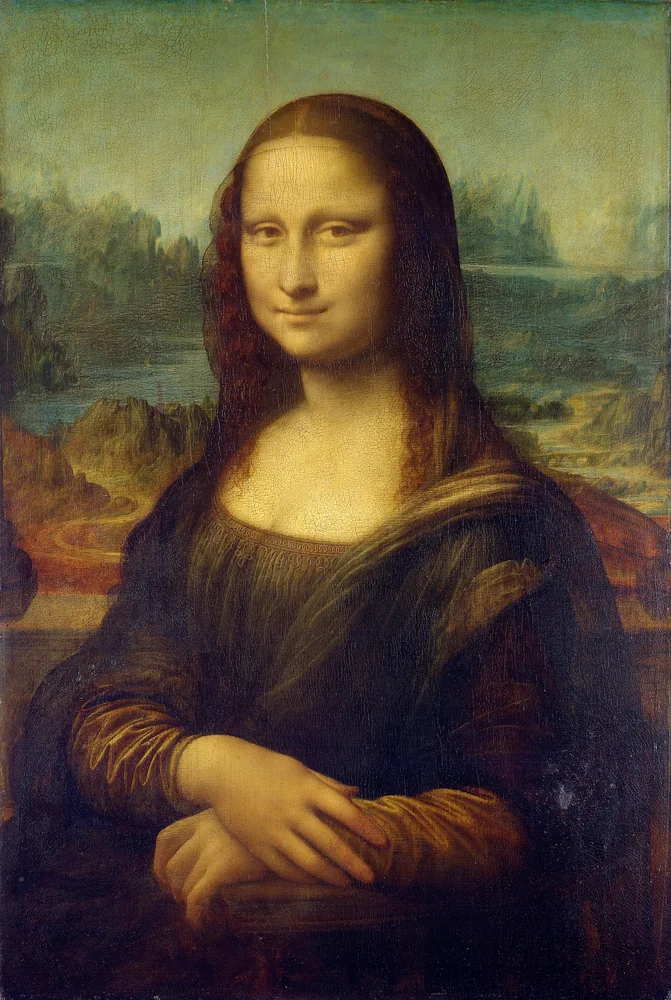
Mona Lisa
Painted in oil on a white poplar panel between circa 1503 and 1519, the Mona Lisa is an archetypal masterpiece of the Italian Renaissance by Leonardo da Vinci. Traditionally identified as a half-length portrait of the Italian noblewoman Lisa del Giocondo, the work was never delivered to the Giocondo family. Instead, Leonardo retained it across years of meticulous refinement. The portrait broke ground through its monumental composition, the subtle modelling of sculptural forms, atmospheric illusionism, and the sitter's captivating, ambiguous gaze. Today, it stands as the most famous, sung about, visited, and parodied artwork in human history.
Look for
- The subject's subtle, enigmatic facial expression
- Soft atmospheric illusionism in the background landscape
- The delicate, sculptural modelling of the hands and posture
The Daily Quiz
5 questions from today's reading. Pick an answer to see if you're right.
-
Along which part of the wood is the block cut when making a woodcut?
Answer
The wood grain. Unlike wood engraving which uses the end-grain, a woodcut block is cut along the wood grain.
-
At what age was J. M. W. Turner accepted as a student at the Royal Academy of Arts?
Answer
14. A child prodigy, Turner gained entry into the Royal Academy of Arts at the age of 14.
-
Which prominent visual artist is associated with the Minimalism movement?
Answer
Donald Judd. Donald Judd is listed among the leading visual artists associated with the Minimalist movement.
-
Under which artist did Tamara de Lempicka study painting in Paris?
Answer
André Lhote. In Paris, Tamara de Lempicka studied painting with Maurice Denis and André Lhote.
-
In which Dutch city was the Rijksmuseum originally founded in 1798?
Answer
The Hague. The Rijksmuseum was founded in The Hague on 19 November 1798 before relocating to Amsterdam in 1808.
Puzzle Corner
Who am I?
- Art historians describe me as the final representative of a painterly tradition running directly from Rubens to Watteau.
- My sons achieved fame in their own right, one becoming a ceramic artist and another a celebrated filmmaker.
- I was a central figure of the French Impressionist movement, renowned for my luminous depictions of feminine beauty.
- My first name is shared with a saint and my middle name evokes imperial majesty, but my canvases celebrate simple, radiant light.
Reveal the answer
Pierre-Auguste Renoir. Pierre-Auguste Renoir was a pillar of French Impressionism whose celebrated depictions of light and feminine grace inspired generations. Wikipedia →
Scrambled masters
IQ AIHIBS
Self-taught Chinese painter from Hunan noted for playful scenes of animals, toys, and vegetables.
Show answer
Qi Baishi Wikipedia →
RACOGAGAIV
Italian master of tenebrism whose intense chiaroscuro and realism transformed Baroque painting.
Show answer
Caravaggio Wikipedia →
DYAN LWROAH
Pop art pioneer from Pittsburgh who turned commercial silkscreens and 15 minutes of fame into fine art.
Show answer
Andy Warhol Wikipedia →
Word of the Day
Craquelure
krak-LOOR
A fine network of dense cracks appearing on the surface of materials such as paintings or glazes due to drying, aging, or intentional technique.
Example: Chinese Ge ware ceramics, known for deliberate crackle patterns in their glazes.
Wikipedia →Daily features are written by ArtSleuth's AI (Google Gemini) from the linked Wikipedia articles. Paintings: public domain, via Wikimedia Commons.