The ArtSleuth Chronicle
“Curated insights from the world of art.”
Edition of November 16, 2026
On This Day
-
1625
Died
Italian Renaissance painter Sofonisba Anguissola died, remembered for setting a historic precedent for women in art and serving as tutor to the Queen of Spain.
Wikipedia → -
1793
Born
Irish Romantic painter Francis Danby was born, notable as a leading figure of the Bristol School famed for imaginative, dramatic landscapes.
Wikipedia → -
1932
Born
Colombian artist and art historian Beatriz González was born, celebrated for her vibrant pop-art paintings portraying life during La Violencia.
Wikipedia → -
2019
Died
British photographer Terry O'Neill died, leaving behind iconic candid portraits documenting the fashion, styles, and celebrities of the 1960s.
Wikipedia →
Artwork of the Day
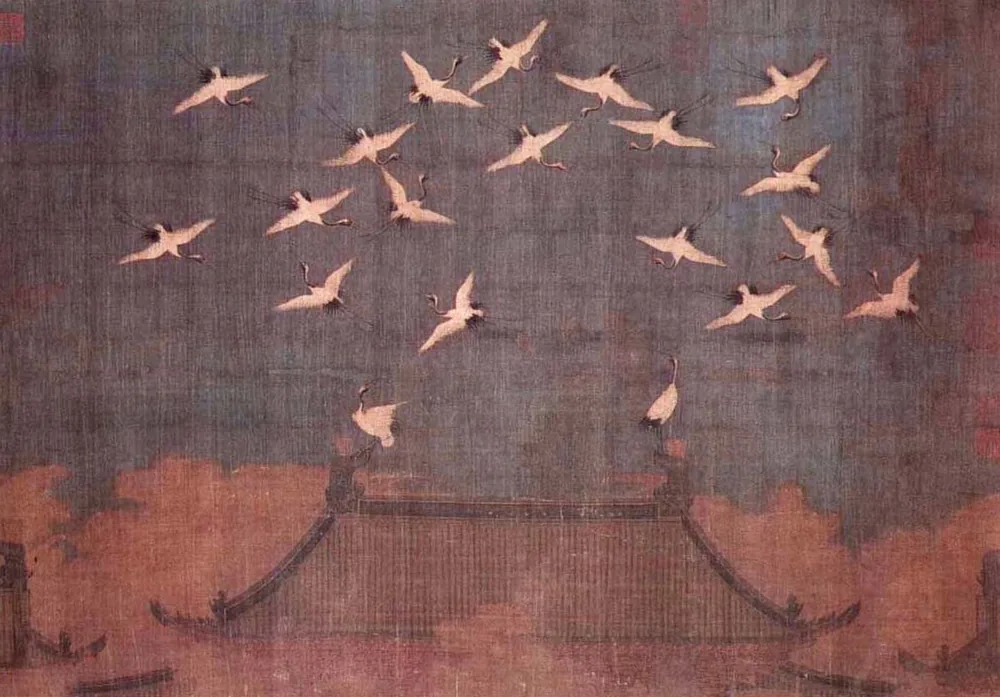
Auspicious Cranes
Created in 1112 in China, Auspicious Cranes is attributed to Emperor Huizong of Song, born Zhao Ji, the eighth ruler of the Song dynasty. Huizong was an imperial monarch who presided over a cultured court in the capital of Bianjing, where he pursued a lavish lifestyle alongside artistic interests. Known for actively promoting Taoism, in which cranes carry deep symbolic importance, the emperor ruled during a complex era marked by major cultural patronage, imperial collections of rarities, and political tensions involving powerful court figures and regional uprisings. Auspicious Cranes reflects the refined imperial artistic traditions of the Song dynasty court, highlighting Huizong's personal dedication to painting and state ritual. The work captures both his aesthetic pursuits and his spiritual devotion to Taoist ideals before later political crises and foreign invasions from the Jin dynasty overtook his reign. As a rare surviving imperial painting, it represents Huizong's royal artistic legacy.
Look for
- The depicted flock of auspicious cranes
- The imperial composition associated with Emperor Huizong
- Reflections of Taoist imagery and courtly elegance
The Daily Quiz
5 questions from today's reading. Pick an answer to see if you're right.
-
What did André Breton seek to resolve into an 'absolute reality' or surreality?
Answer
Dream and reality. André Breton defined Surrealism's core intention as resolving the contradictory conditions of dream and reality into an absolute super-reality.
-
Where did the National Museum of Korea open a new branch in June 2021?
Answer
Incheon International Airport. The National Museum of Korea opened a branch inside Incheon International Airport near Gate 22 to celebrate its 20th anniversary.
-
Where did German Romantic landscape painter Caspar David Friedrich study from 1794 to 1798?
Answer
Copenhagen. Caspar David Friedrich completed his studies in Copenhagen before eventually settling in Dresden.
-
Which renowned master was the most prominent practitioner of the sfumato technique?
Answer
Leonardo da Vinci. Leonardo da Vinci pioneered and perfected sfumato based on his optics research, applying it to famous works like the Mona Lisa.
-
How did Raja Ravi Varma significantly broaden public access to his artwork across India?
Answer
By making affordable lithographs of his paintings. Raja Ravi Varma democratized art appreciation by distributing affordable lithographic prints of his paintings to the public.
Puzzle Corner
Who am I?
- In 1917, I relocated to a suburb as my style continued evolving, having earlier developed a rigorous aesthetic emphasizing flattened forms and decorative pattern.
- Alongside Pablo Picasso, I came to be recognized as one of the definitive figures shaping twentieth-century visual modernism across painting and sculpture.
- The intense, vivid coloration in my works between 1900 and 1905 earned me notoriety as a leader of the Fauves, or 'wild beasts.'
- I was a French draughtsman, printmaker, and sculptor known above all as a painter of vibrant colour and fluid draughtsmanship.
Reveal the answer
Henri Matisse. This is Henri Matisse, the French modernist celebrated for his revolutionary use of color and leadership of Fauvism. Wikipedia →
Scrambled masters
EUACDL ETMNO
Founder of French Impressionism known for plein air landscapes like Impression, Sunrise.
Show answer
Claude Monet Wikipedia →
FNDAONRE ROBTEO
Colombian artist famous for depicting people and figures with exaggerated, voluminous forms.
Show answer
Fernando Botero Wikipedia →
TUAGSV IMTKL
Austrian symbolist and Vienna Secession founder famed for ornate works such as The Kiss.
Show answer
Gustav Klimt Wikipedia →
Word of the Day
Tenebrism
TEN-uh-briz-um
A style of painting using pronounced contrasts where darkness dominates the image to produce dramatic illumination. It relies on a theatrical spotlight effect to heighten emotional and visual intensity.
Example: Baroque paintings featuring violent contrasts where dark shadows overpower illuminated focal subjects.
Wikipedia →Daily features are written by ArtSleuth's AI (Google Gemini) from the linked Wikipedia articles. Paintings: public domain, via Wikimedia Commons.