The ArtSleuth Chronicle
“Curated insights from the world of art.”
Edition of November 8, 2026
On This Day
-
1494
Died
Italian Renaissance painter and architect Melozzo da Forlì died, celebrated for his pioneering use of foreshortening in frescoes.
Wikipedia → -
1828
Died
English wood-engraver and illustrator Thomas Bewick died, renowned for revolutionizing illustration in books like A History of Quadrupeds.
Wikipedia → -
1883
Born
American painter Charles Demuth was born, celebrated for exquisite watercolors and his contributions to Precisionism.
Wikipedia → -
1905
Died
Russian painter Victor Borisov-Musatov died, known for mixing Post-Impressionism, Symbolism, and realism to help form Russian Symbolism.
Wikipedia →
Artwork of the Day
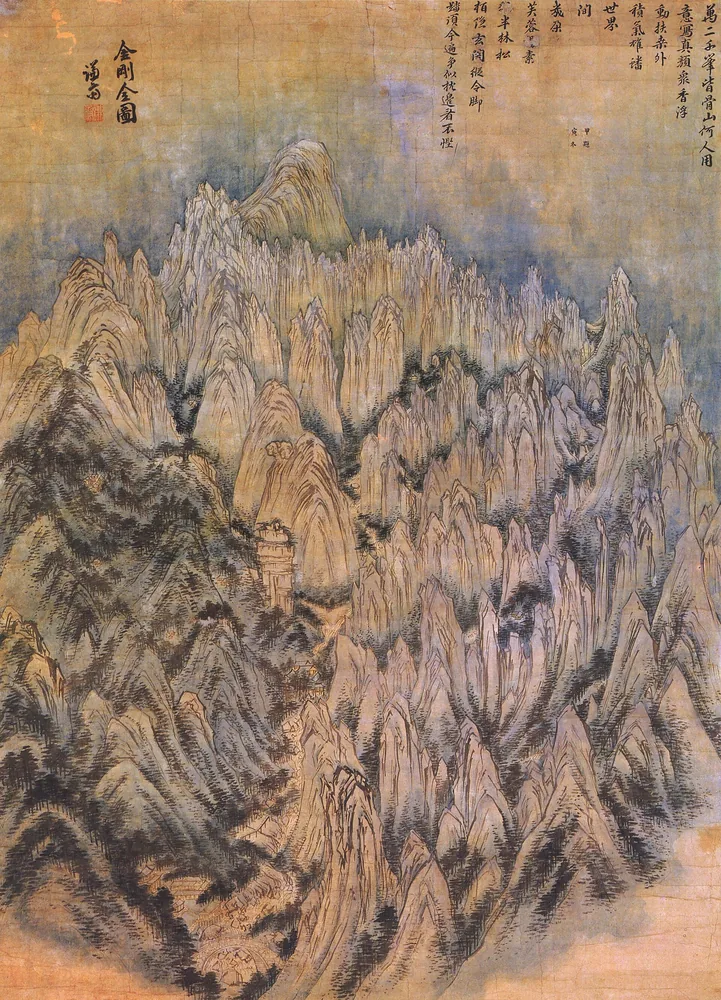
General View of the Diamond Mountains
Created in 1734 during the reign of King Yeongjo, General View of the Diamond Mountains (Geumgang jeondo) is a celebrated landscape painting by the renowned Korean artist Jeong Seon. The composition captures the sweeping grandeur of Mount Geumgangsan, widely known as the Diamond Mountains. In Korean art history, Jeong Seon is celebrated for depicting native Korean landscapes rather than idealized Chinese scenery, creating works grounded in real observation and national identity. Classified as the 217th National Treasure of South Korea on August 6, 1984, the masterpiece demonstrates masterful brushwork and profound atmospheric depth. Today, the painting is owned by Lee Kun-hee and is carefully preserved and displayed at the Ho-Am Art Museum in Yongin, Gyeonggi Province, remaining one of Korea's most admired cultural achievements.
Look for
- Dynamic brushstrokes representing rugged mountain peaks
- Atmospheric composition of the Diamond Mountains
- Traditional Korean landscape perspective and ink shading
The Daily Quiz
5 questions from today's reading. Pick an answer to see if you're right.
-
What is the typical arrangement of panels in a traditional triptych?
Answer
A central panel flanked by two smaller panels. A triptych typically consists of a larger middle panel flanked by two smaller related works, often hinged together.
-
Which artists helped pioneer the Pop art movement in Britain?
Answer
Eduardo Paolozzi and Richard Hamilton. Pop art developed initially in Britain through artists such as Eduardo Paolozzi and Richard Hamilton.
-
Where was modernist artist Marc Chagall born?
Answer
Near Vitebsk, in the Russian Empire. Chagall was born near Vitebsk, located in present-day Belarus, which was then part of the Russian Empire.
-
Where did the National Museum of Korea open an airport branch in 2021?
Answer
Incheon International Airport. On June 24, 2021, the museum opened a branch in the boarding area of Incheon International Airport near Gate No. 22.
-
Which imperial ruler patronized Albrecht Dürer starting in 1512?
Answer
Emperor Maximilian I. From 1512 onward, Albrecht Dürer was patronized by Holy Roman Emperor Maximilian I.
Puzzle Corner
Who am I?
- Gustav Klimt served as an influential mentor early in my artistic career.
- My works shocked contemporary viewers with their raw sexuality and twisted bodily forms.
- I produced numerous expressive self-portraits, including striking nude studies.
- I was an Austrian painter recognized as a defining figure of early Expressionism.
Reveal the answer
Egon Schiele. Egon Schiele was a master Austrian Expressionist known for his intense lines and raw psychological self-portraits. Wikipedia →
Scrambled masters
TNTIAI
Master of Renaissance Venetian painting celebrated for revolutionary color application and imperial portraits.
Show answer
Titian Wikipedia →
UPAL UNGAGUI
French Post-Impressionist and Symbolist artist famous for experimental color and Synthetist style.
Show answer
Paul Gauguin Wikipedia →
IRFAD HLAKO
Mexican painter celebrated for deeply personal self-portraits blending realism, fantasy, and folk culture.
Show answer
Frida Kahlo Wikipedia →
Word of the Day
Gilding
GIL-ding
A decorative technique for applying a very thin layer of gold over solid surfaces like metal, wood, porcelain, or stone.
Example: Silver-gilt vessels or ormolu mounts on decorative bronzes.
Wikipedia →Daily features are written by ArtSleuth's AI (Google Gemini) from the linked Wikipedia articles. Paintings: public domain, via Wikimedia Commons.