The ArtSleuth Chronicle
“Curated insights from the world of art.”
Edition of November 24, 2026
On This Day
-
1472
Born
Florentine sculptor Pietro Torrigiano was born; after fleeing Florence for breaking Michelangelo's nose, he became pivotal in introducing Renaissance art to England.
Wikipedia → -
1859
Born
American Beaux-Arts architect Cass Gilbert was born, remembered for designing the Woolworth Building and the United States Supreme Court Building.
Wikipedia → -
1864
Born
French artist Henri de Toulouse-Lautrec was born, renowned for capturing the theatrical, bohemian nightlife of Paris during the Belle Époque.
Wikipedia → -
1957
Died
Mexican painter Diego Rivera died, leaving behind monumental frescoes that helped establish the mural movement across Mexico and the United States.
Wikipedia →
Artwork of the Day
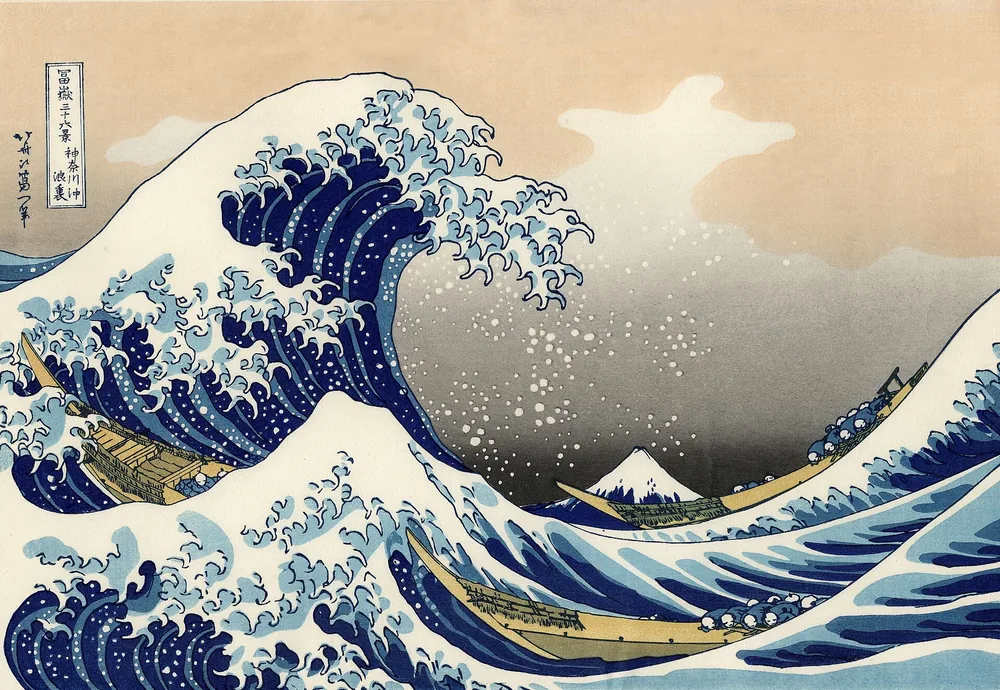
The Great Wave off Kanagawa
Created in late 1831 during the Edo period, 'The Great Wave off Kanagawa' is an iconic woodblock print by Japanese ukiyo-e master Katsushika Hokusai. The artwork captures three vulnerable wooden boats navigating a violent, storm-churned sea, where an enormous cresting wave spirals dramatically overhead while Mount Fuji sits quietly in the distance. Serving as the opening print in Hokusai's celebrated series 'Thirty-six Views of Mount Fuji', the composition broke new ground by blending traditional Japanese woodblock techniques with European graphical perspective. In addition, its vibrant use of imported Prussian blue ink revolutionised printmaking in Japan. The work proved an instant commercial success in Japan and later made a profound impact across Europe, inspiring Western Impressionist painters. Today, multiple leading museums worldwide preserve impressions of this enduring masterpiece.
Look for
- The towering wave framing Mount Fuji in the distance
- Three slender boats tossed within the violent swells
- The vibrant shades of imported Prussian blue ink
The Daily Quiz
5 questions from today's reading. Pick an answer to see if you're right.
-
At what age did Wassily Kandinsky begin his painting studies in life-drawing, sketching, and anatomy?
Answer
30. Kandinsky began his formal painting studies at the age of 30 before moving to Munich.
-
How is the decorative technique of sgraffito executed on walls?
Answer
Scratching through plaster to reveal a contrasting color beneath. Sgraffito involves scratching through an outer coating on a hard surface to reveal an underlying layer of contrasting colour.
-
With which Venetian painter is Titian considered a founder of the Venetian school?
Answer
Giorgione. Along with Giorgione, Titian is regarded as a founder of the Venetian Renaissance style.
-
During which historical Japanese period was the term 'Nihonga' coined to contrast with Western oil painting?
Answer
Meiji period. The term Nihonga was coined during the Meiji period (1868–1912) to distinguish native styles from Yōga, or Western-style painting.
-
Which celebrated painting is part of the permanent collection of the Art Institute of Chicago?
Answer
A Sunday on La Grande Jatte. Georges Seurat's 'A Sunday on La Grande Jatte' is among the major works stewarded by the Art Institute of Chicago.
Puzzle Corner
Who am I?
- I found more commercial success and admiration in France during my lifetime than I ever achieved in my native country.
- Recognition was slow to come at home; I was not elected to the Royal Academy of Arts until the age of 52.
- I famously declared that painting is but another word for feeling, pouring deep affection into scenes of Dedham Vale and Wivenhoe Park.
- My rural English landscape depicting a hay cart crossing a river pond is one of Romanticism's most beloved images.
Reveal the answer
John Constable. English Romantic landscape painter John Constable captured the scenery of Dedham Vale with unprecedented naturalism and feeling. Wikipedia →
Scrambled masters
SIEIMRTAA EHIGTCNESIL
Italian Baroque master who was the first woman to join the Accademia di Arte del Disegno in Florence.
Show answer
Artemisia Gentileschi Wikipedia →
EERN TGARIMTE
Belgian surrealist painter who placed ordinary, familiar objects into startling and unexpected contexts.
Show answer
René Magritte Wikipedia →
CJNAOKS PCLOKOL
Abstract expressionist celebrated for pouring and dripping liquid household paint onto horizontal canvases.
Show answer
Jackson Pollock Wikipedia →
Word of the Day
Tempera
TEM-puh-ruh
A permanent, fast-drying painting medium made by mixing dry pigments with a water-soluble glutinous binder, most traditionally egg yolk.
Example: Early Italian Renaissance panel paintings before the widespread adoption of oil paint.
Wikipedia →Daily features are written by ArtSleuth's AI (Google Gemini) from the linked Wikipedia articles. Paintings: public domain, via Wikimedia Commons.